Over the past decade, spam filters from Google and Microsoft have become so intelligent that they now block 99% of fraudulent emails before you even see them. As a result, cybercriminals had to shift their attack vectors. Their new target? Your pocket. Today, from a security engineering perspective, we will analyze how Vishing and Smishing operate—the two most devastating mobile scams right now.
1. Smishing (SMS Phishing): The 160-character trap
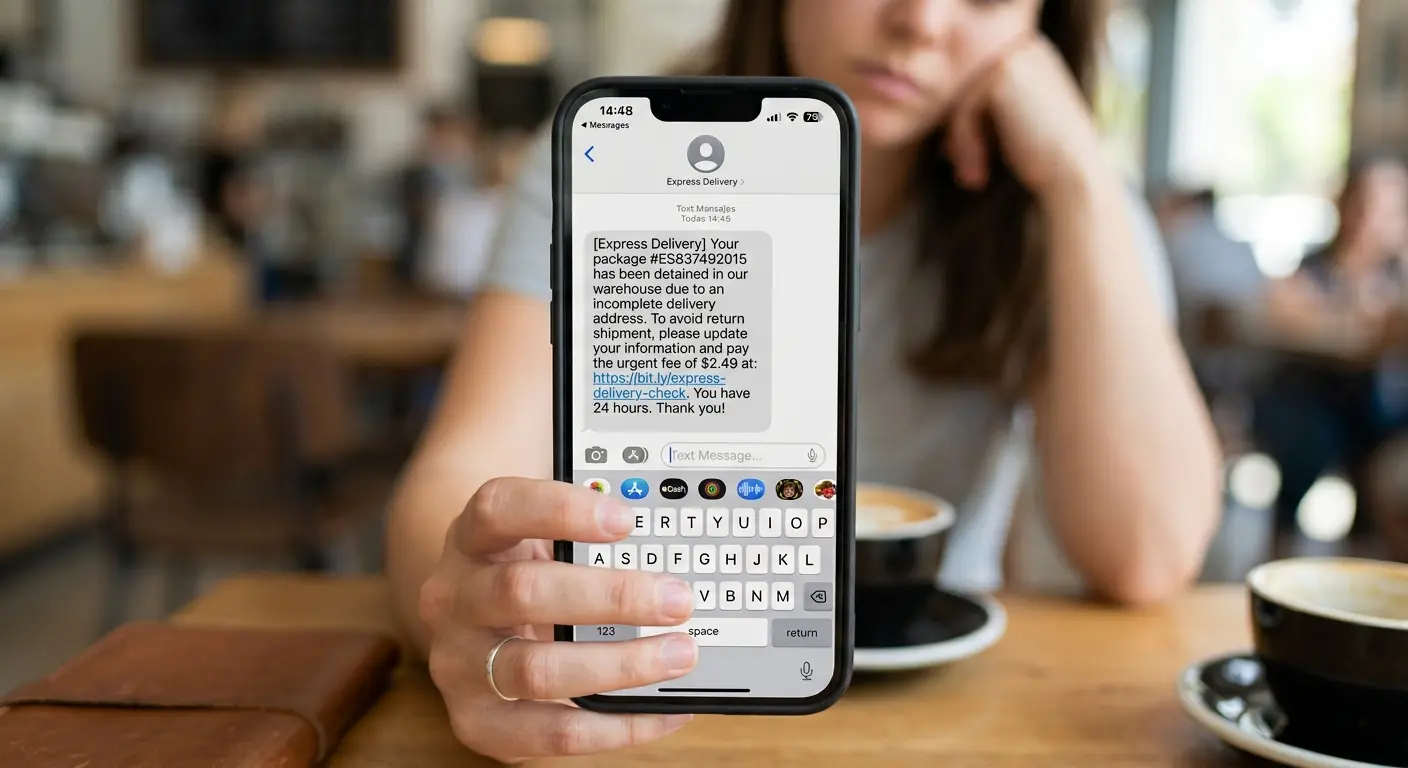
Smishing is the act of sending fake text messages (SMS or iMessage) to deceive you. While the open rate for an email barely reaches 20%, the read rate for an SMS is 98%, and most are read within the first 3 minutes. Scammers ruthlessly exploit this immediate attention.
The classic attack relies on curiosity or logistics. You receive a message from "USPS", "FedEx", or "UPS" stating: "Your package is held at customs. Pay a $2.99 clearance fee here to release it." Clicking the link sends you to a cloned website (Typosquatting) where they steal your 16-digit credit card number instantly.
2. Vishing (Voice Phishing): Hacking through voice
If Smishing is dangerous, Vishing is pure art in social engineering. These are scams conducted over phone calls where the criminal impersonates a bank executive, tech support, or even law enforcement.
To build credibility, they use a technique called Caller ID Spoofing. They manipulate the telephone network so that your phone's screen literally displays the real name and number of your bank (e.g., Chase or Bank of America). When you answer, they say: "We detected a suspicious $800 charge on your card. To cancel it, please read me the 6-digit code we just sent via SMS." In reality, that code is the authorization for a wire transfer they just initiated.
3. The New Level of Terror: AI and Voice Deepfakes
Currently, cybersecurity engineers are facing an evolution of Vishing powered by Artificial Intelligence. Attackers can take a 10-second video from your child's or relative's social media, clone their voice perfectly using AI, and call you in the middle of the night claiming they've been in an accident and need money urgently (often known as the "Grandparent Scam"). It’s an attack that completely bypasses logic by triggering the victim's survival instincts.
4. Anatomy of the Attacks: Learn to differentiate them
| Type of Attack | Vector / Medium | Classic Example (The Hook) |
|---|---|---|
| Traditional Phishing | "Your Netflix account has been suspended. Update your payment details here." | |
| Smishing | SMS / WhatsApp / iMessage | "USPS: Your package is on hold. Pay the redelivery fee at this link." |
| Vishing | Voice Call | "This is the Bank Fraud Department. We need your security code to block a charge." |
5. The "Zero Trust" Defense Protocol
To shield yourself against these attacks, you must apply the "Zero Trust" framework in your daily life (Never trust, always verify):
- Hang up and call back: If your "bank" calls warning you of fraud, hang up immediately. Find your physical debit card, dial the toll-free number printed on the back, and ask if the issue is real.
- Never tap links in text messages: If you receive an alert from Amazon or your bank via SMS, do not open the link. Open your browser and type the address yourself (e.g., amazon.com), or use the official mobile app.
- Establish a family safe word: To protect against AI voice deepfakes, agree on a secret word with your family members (e.g., "Pineapple"). If someone calls asking for emergency funds, ask them for the safe word. An AI won't know it.
[Your affiliate link for Malwarebytes Mobile, Bitdefender Mobile Security, or Truecaller Premium goes here]
🤖 Don't fall into the panic trap
If you just received an alarming text message with a link or a number to call, do not act impulsively. Copy it and paste it into our AI Message Checker. XolHound will analyze if the link corresponds to a known Smishing attack in a matter of seconds.