We've all been there: sitting in front of a screen, frustrated because a system demands "one uppercase letter, a number, a special character, and the blood of a unicorn" to create a password. The result is usually something like Spr!ng2024@—a password you will forget by tomorrow and that, to make matters worse, cybercriminals can crack in seconds. As a cybersecurity engineer, I'll teach you the industry standard to solve this problem once and for all.
1. The "Complexity" Trap: Why P@ssw0rd123 no longer works
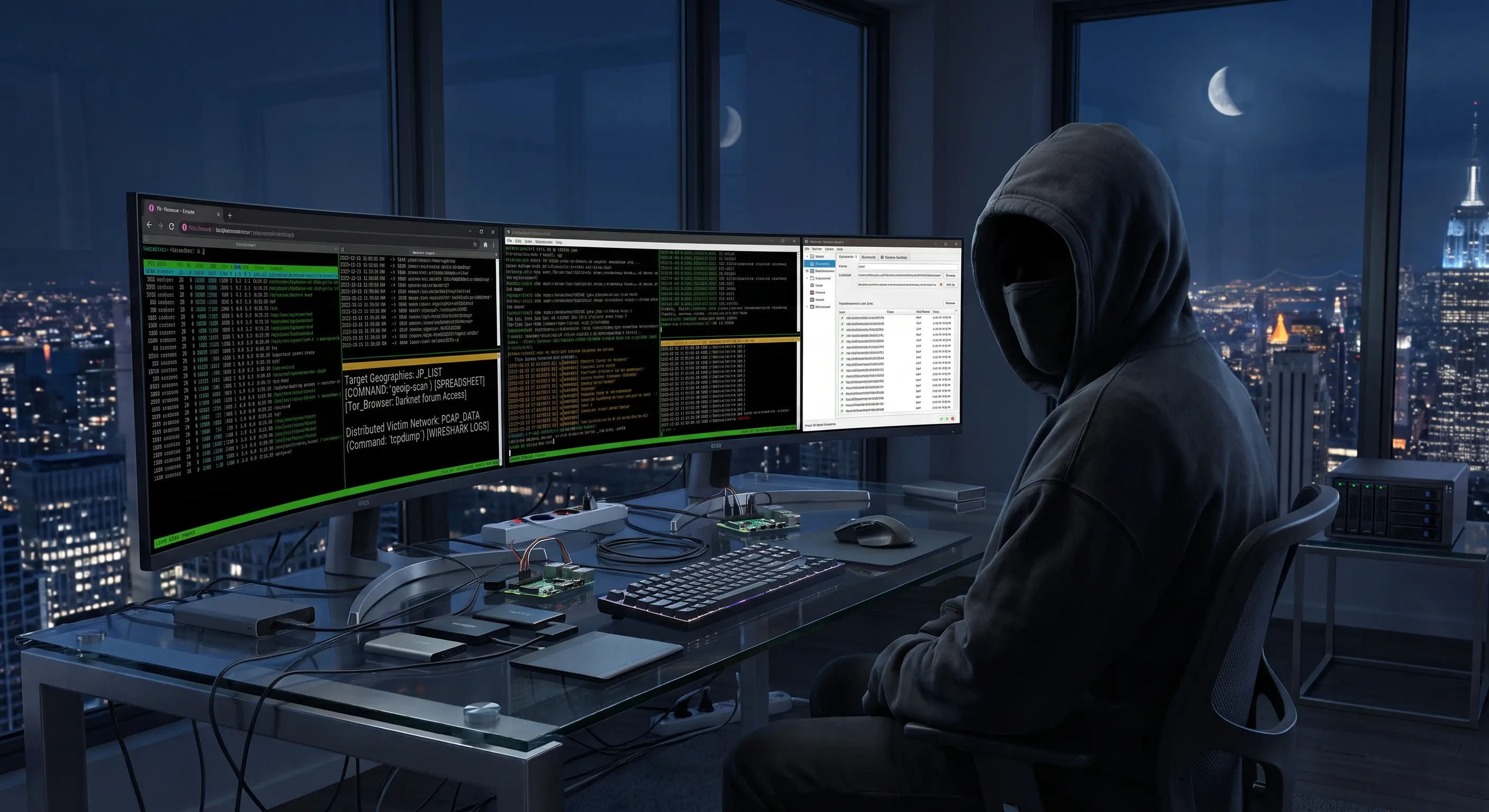
For years, we were taught that swapping letters for numbers or symbols (like changing an "a" to an "@" or an "E" to a "3") made a password secure. This is completely false today. Modern attackers do not guess passwords manually; they use automated software (brute-force and dictionary attacks) capable of processing billions of combinations per second.
These algorithms already know human habits, like adding a capital letter at the beginning or tacking "2024" or an exclamation mark at the end. For a modern graphics processing unit (GPU) used by a hacker, cracking S3cur!ty99 takes less than a day. The main issue with these passwords is that they are hard for you to remember, but incredibly easy for a machine to guess.
2. The Mathematical Secret: The "Passphrase"
In cryptography, there is a golden rule: Length heavily outperforms complexity. The U.S. National Institute of Standards and Technology (NIST) updated its digital identity guidelines to strongly recommend the use of Passphrases.
A Passphrase consists of stringing together several common words that have no logical connection to each other. By adding words, you increase the length of the key exponentially, creating an impenetrable mathematical shield while keeping a highly visual, easy-to-remember image in your mind.
| Key Type | Example | Estimated Time to Hack |
|---|---|---|
| Short but Complex | T1g3R!@ | Less than 2 minutes |
| Long but Predictable | NewYork2024! | 3 to 5 Days |
| Passphrase | cactus-guitar-ocean-pyramid | +100,000 Centuries (Impossible) |
3. The Rule of 4: Create your super password today
Applying this model is extremely simple. Just follow this structure the next time you need to create a master key (e.g., for your primary email or Chase bank account):
- Pick 4 random words: Look around your room and imagine objects, colors, or animals that have no relation. Example:
hat,metal,giraffe,cable. - Link them with a separator: Use a dash or a space. It would look like this:
hat-metal-giraffe-cable. - Meet the system requirements: If a website stubbornly forces you to use an uppercase letter and a number, just capitalize the first letter and add a number at the end:
Hat-metal-giraffe-cable1.
The Result: You have a password of nearly 30 characters. For your brain, it's just a bizarre, memorable image (a giraffe wearing a metal hat chewing on a cable), but for a supercomputer, it is cryptographically indestructible.
4. The Danger of Recycling Passwords
Now you have the perfect master key. But here comes the ultimate rule of cybersecurity: You cannot use the same password in two different places. If you use your new super password for your bank and also for a random online clothing store, and that store suffers a data breach, hackers will have the direct key to your finances.
Biologically, it is impossible for humans to remember 50 different passphrases for every service they use. That is why security professionals rely on one fundamental tool: a Password Manager.
[Your affiliate link for NordPass, 1Password, Bitwarden, or Dashlane goes here]
🤖 Verify your digital hygiene with XolHound
Many traditional passwords have already been leaked on the Dark Web. Did you receive a strange email demanding payment because they claim to have your password? Copy the message and paste it into our AI Message Checker to find out if it's a real threat or an automated scam.