We've all seen it in the family group chat: a link forwarded by an aunt or a friend claiming that Amazon, Walmart, Rolex, or Coca-Cola is giving away high-end smartphones for their "50th Anniversary". While it may seem like an obvious scam to some, millions of people fall for it every year. In cybersecurity engineering, we call this a Staged Social Engineering attack.
1. The Infection Vector: Trust-based propagation
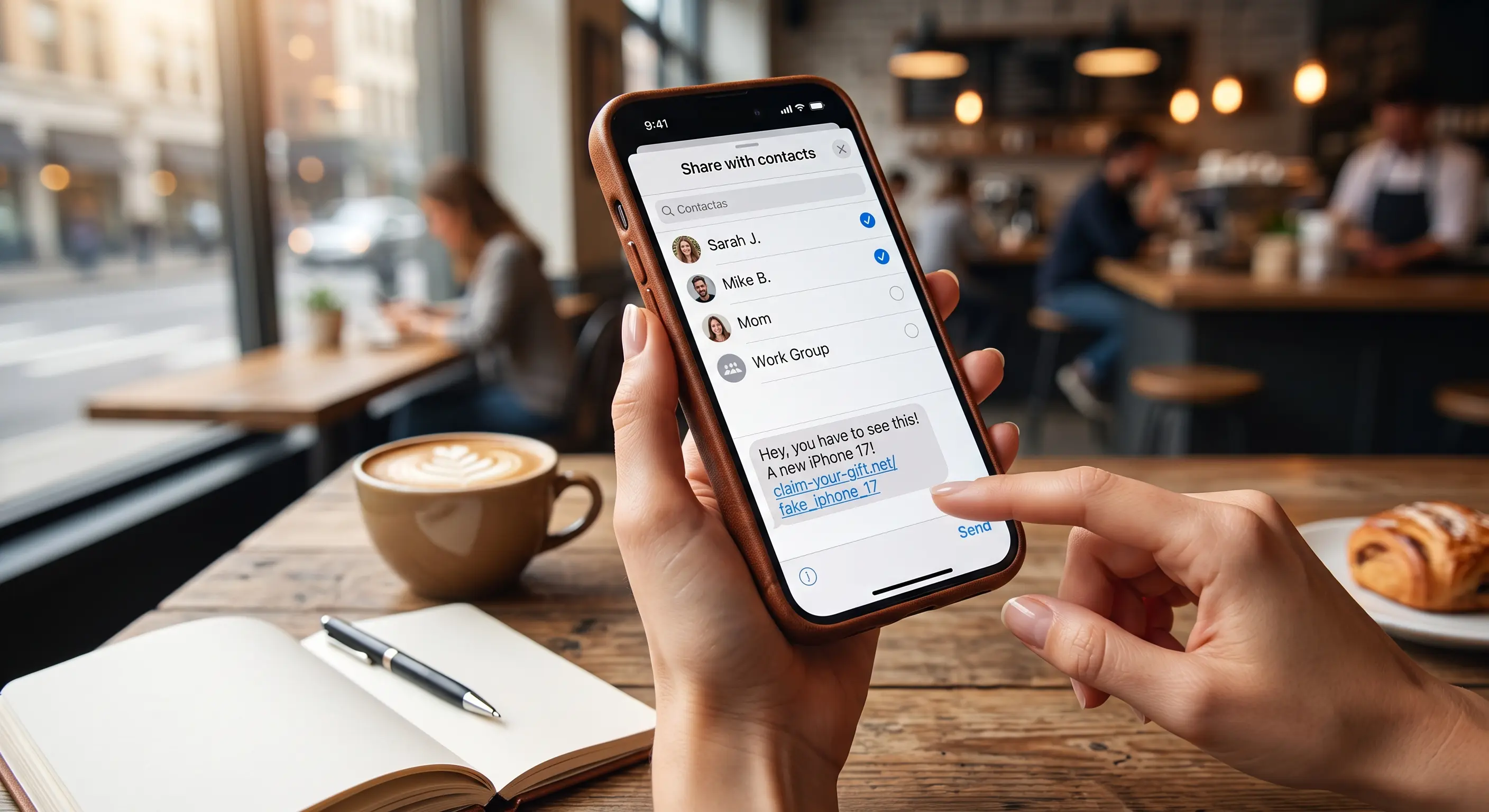
This attack doesn't arrive via an email from a Nigerian prince; it gets forwarded by someone you know on WhatsApp, iMessage, or Facebook Messenger. The creators of this scam program a script that forces you to share the link with 5 groups or 20 contacts before you can "claim your prize."
This turns victims into unwitting accomplices. The attack behaves like a computer "worm" virus, but instead of infecting your hard drive to replicate, it infects the user's mind, using interpersonal trust to bypass any skepticism filters you might have.
2. The Digital Theater: The prize wheel and social proof
Upon clicking, you are taken to a meticulously cloned webpage (Typosquatting) displaying a virtual prize wheel. Here, two military-grade psychological tricks are applied:
- The fake near-miss: The first time you spin the wheel, you always lose. This is hardcoded HTML and JavaScript. The human brain assumes that if the game were rigged, you would win on the first try. On the second attempt, the wheel magically stops on the iPhone 15 Pro Max. Bingo!
- Social proof: At the bottom of the screen, you will see dozens of comments that look exactly like Facebook ("Wow, I thought it was fake but my iPhone just arrived via FedEx!"). These are automatically generated by the page's code; they aren't even connected to a real social network.
3. The "Payload": The exact moment of the theft
Once you jump through the hoops of forwarding the message to all your contacts, the final blow (the Payload) arrives. They will tell you that your $1,200 phone is ready to be shipped for free, but... you must pay a $2.99 fee for "shipping and handling" or "customs clearance".
And there lies the master trap. Their goal was never to steal $3 from you. Their goal is to get you to enter your 16-digit credit card number, expiration date, and CVV code into their fake payment gateway. This technique is known in the industry as Digital Skimming or Formjacking.
4. The Hidden Danger: Fleeceware and Ghost Subscriptions
Sometimes, when you enter your card details to pay that $3 "shipping" fee, you are actually signing an invisible contract in microscopic print at the bottom of the page. You are authorizing a shell company overseas to charge you for a "Premium Entertainment Services" subscription at $49.99 a month.
When your bank processes the charge at the end of the month, they can't easily refund it because you technically entered the details yourself and authorized the original transaction.
| Element to Evaluate | Real Giveaway (Brands) ✅ | Anniversary Scam ❌ |
|---|---|---|
| Participation Mechanics | Posted on the brand's official verified social media accounts (with the blue checkmark). | Forces you to share the link via messaging apps X amount of times. |
| Hidden Costs | If you win a legitimate prize, the company covers absolutely all expenses. | You must pay a "small fee" for shipping using your credit card. |
| Link Behavior | Takes you directly to amazon.com or target.com. | Weird URL (e.g., amz-gifts-vip.xyz) or asks you to download an app. |
[Your affiliate link for Bitdefender, Norton, or Surfshark goes here]
🤖 Inspect the link before getting excited
Multinational brands do not give away iPhones via chain messages. If you receive a promotional link from a contact, copy it without clicking and paste it into our AI Message Checker. XolHound will analyze the link's servers in real-time and warn you if it's a Phishing trap.