The phone rings in the middle of the night. You answer and hear your child or partner's voice. They sound scared, crying, and tell you they've been in a severe car accident or are detained at the police station. They ask you to wire money immediately to an unknown account to bail them out. The tone, the breathing, the accent... everything sounds exactly like them.
However, the real person is sleeping peacefully in their bed. You've just received a call generated by an audio Deepfake. What used to be science fiction is today one of the most sophisticated and common digital threats.
1. What is a Deepfake?
The word Deepfake comes from combining Deep Learning (a branch of Artificial Intelligence) and Fake. It is a technology that uses advanced algorithms to manipulate or create synthetic audio or video files that look and sound 100% real.
Although Deepfakes initially became popular for altering faces in videos, voice cloning has become the preferred weapon for fraud because it requires much less technology to execute, and a phone call eliminates the possibility of the victim looking for visual glitches.
2. Where do they get your voice? (The Attack Vector)
To clone a voice perfectly, an Artificial Intelligence no longer needs hours of recording in a professional studio. Today, scammers only need 3 to 5 seconds of audio from the victim.
Where do they get that sample?
- Social Media: A public video on TikTok, Instagram, or YouTube where the person is speaking.
- Ghost Calls: They call you from an unknown number. You answer saying "Hello? Who is this? Yes, speaking." The other side hangs up. Those few seconds were recorded and are enough to feed the AI.
- Voicemails: Old voicemail greetings.
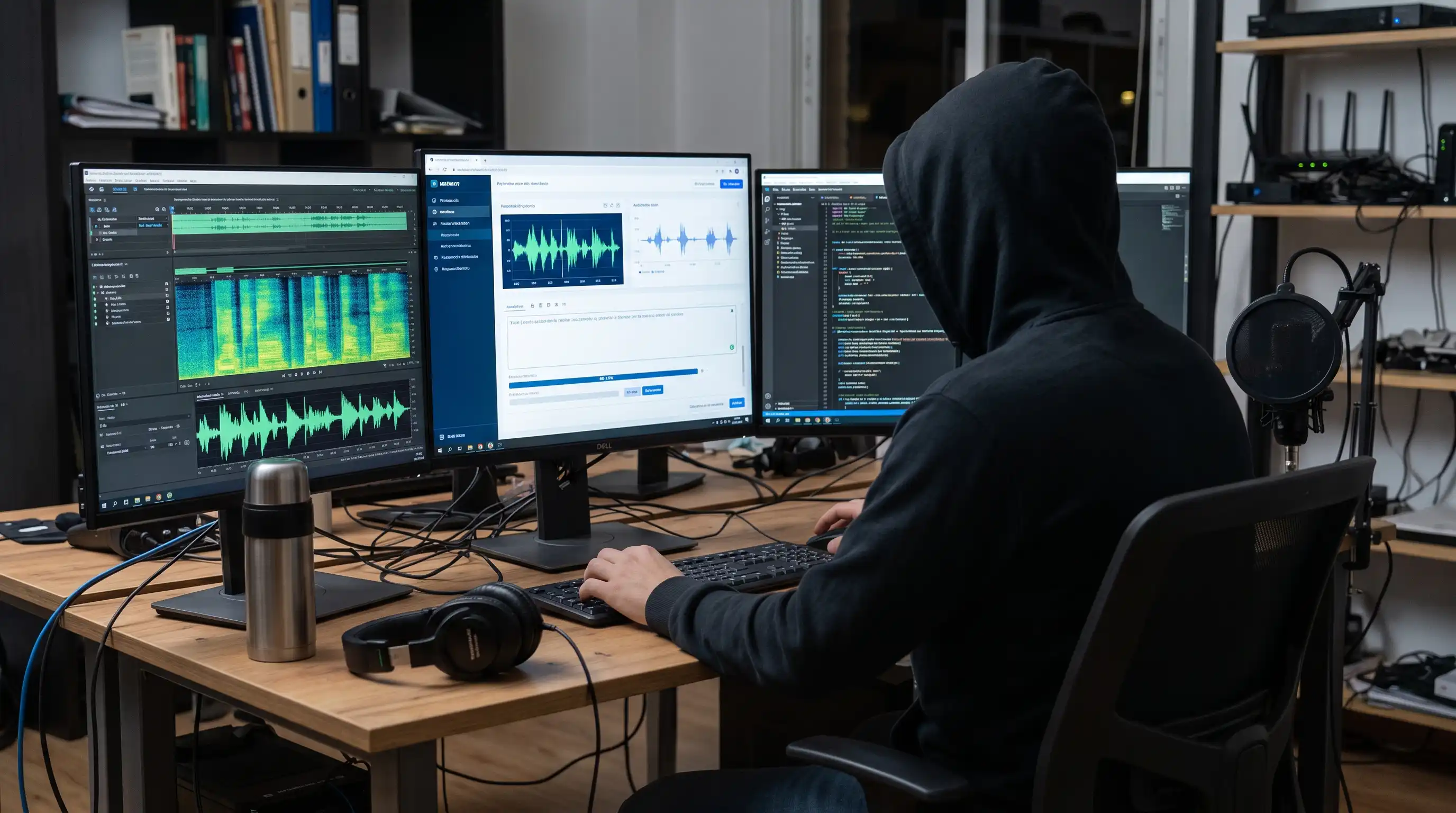
Once the software processes that sample, it maps the pitch, timbre, and accent. From there, the scammer only has to type text on a keyboard, and the Artificial Intelligence will read it out loud, perfectly imitating the cloned person.
3. Psychological Manipulation: The Real Hack
The software clones the voice, but the attack relies heavily on social engineering. Criminals design the script to trigger a state of extreme panic in the victim (an accident, a virtual kidnapping, an imminent legal problem).
When the human brain enters a state of high alert driven by fear, the prefrontal cortex (in charge of logic and analysis) reduces its activity. You stop questioning why your relative is asking you to send money in cryptocurrencies or via gift cards, and you simply comply.
🛡️ How to Defend Yourself: The Safeword
Since the human ear is no longer enough to distinguish an AI from a real person, the best defense is to establish a Zero Trust protocol within your family.
- Establish a Family Safeword: Agree today with your family on a secret, out-of-context keyword (e.g., "Blue lightning" or "Cactus"). If you receive an emergency call asking for money, demand the word. If it's an AI, it won't know it.
- Hang up and call directly: If you receive an alarming call from a loved one from an unknown number, hang up immediately and dial their real phone number saved in your contacts. 99% of the time, they will answer wondering why you are so panicked.
- Pay attention to pauses: Even if the tone is perfect, AIs often do not emulate natural breathing pauses well or show robotic delays when answering complex questions.
🤖 Keep a cool head
If you are contacted on WhatsApp via voice memos asking for urgent money (another very common technique using AI clones), do not act impulsively. Copy the text or transcribe what they are asking for and run it through our AI Message Checker to receive an objective analysis of whether the request pattern matches a digital scam.